
Comprehensive Dental Exam
Regular dental exams help to maintain your long-term oral health.

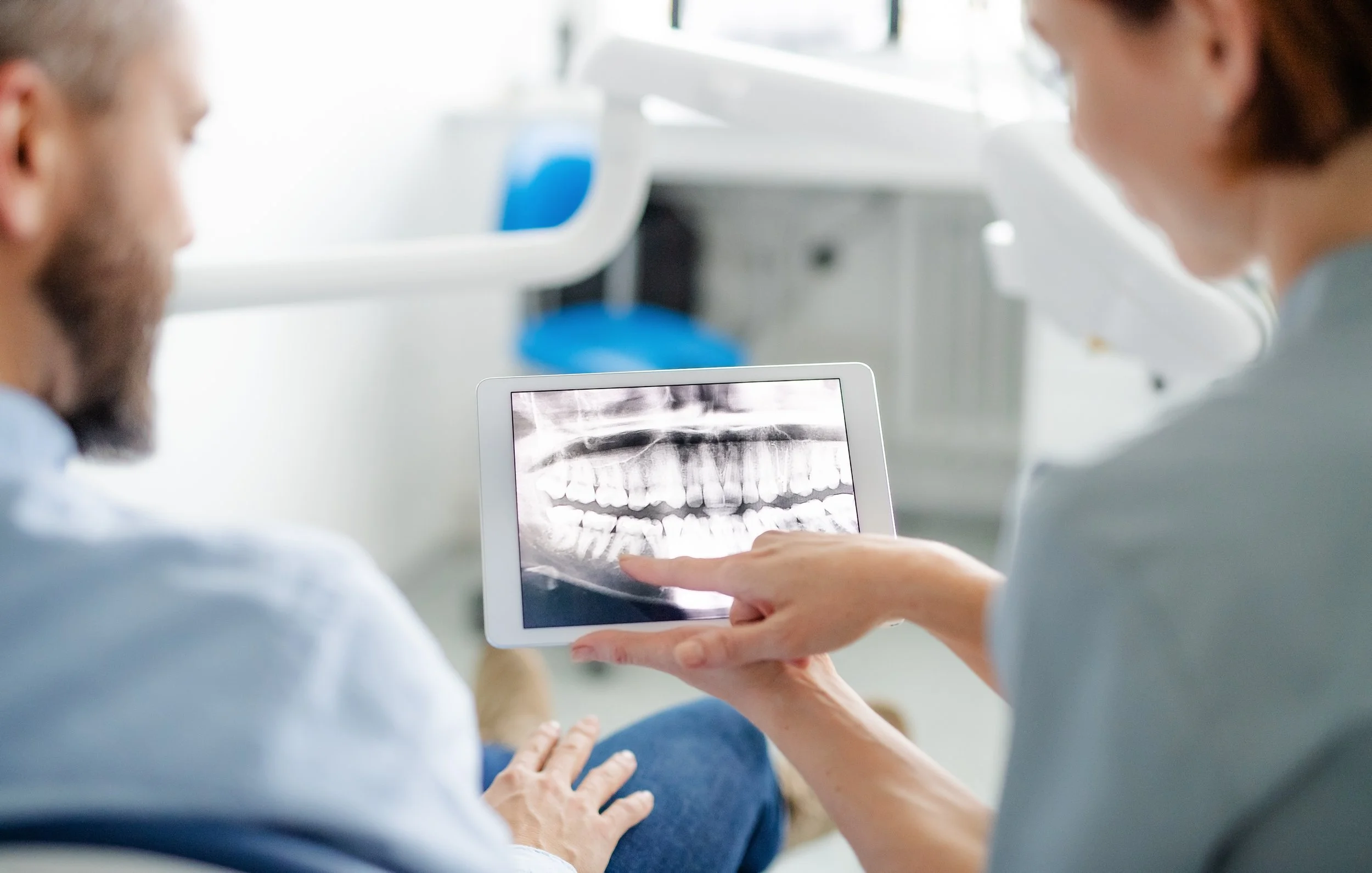
A Comprehensive Dental Exam includes a thorough review of your medical history, visual inspection of the teeth and oral tissues, x-rays, gum-health assessment and oral cancer screening. The dentist will also evaluate your bite and jaw function before documenting findings and creating a personalised treatment plan. This evaluation generally takes 45-60minutes.
Why do I need regular dental check-ups?
Regular check-ups are essential for maintaining long-term oral health. They help spot problems, like cavities, gum disease or oral cancers, early on. Meaning they can be treated before becoming more serious (and more expensive).
How often should I have a dental exam?
Most people benefit from a check-up every 6 to 12 months, but it can vary depending on your oral health needs. Your dentist will recommend the right frequency for you.
What happens during a dental check-up?
A comprehensive dental examination typically includes several key components:
Medical and Dental History Review
Your dentist will ask about current medications, allergies, previous dental treatments, and any ongoing health conditions that might affect your oral health.
Visual Oral Examination
This involves checking your teeth, gums, tongue, throat, and the inside of your cheeks and lips for signs of decay, gum disease, oral cancer, or other abnormalities.
Dental X-rays
Usually bitewing X-rays to detect cavities between teeth, and sometimes a panoramic X-ray to see the overall structure of your jaw and teeth, including wisdom teeth and potential bone issues.
Periodontal Assessment
The dentist or hygienist measures the depth of pockets around your gums using a small probe to check for gum disease and bone loss.
Bite and Jaw Function Evaluation
Checking how your teeth come together when you bite, looking for signs of teeth grinding, jaw joint problems, or bite irregularities.
Oral Cancer Screening
Examining your neck, throat, and mouth tissues for any unusual lumps, discoloration, or lesions.
Documentation and Treatment Planning
Recording findings, discussing any problems discovered, and creating a treatment plan if needed. This often includes recommendations for preventive care, necessary treatments, and follow-up appointments.
Comprehensive Dental Exam
Helpful info about your Dental Exam appointment
Number of appointments: 1
Duration: 30mins - 1hr
You will be seen by a: Dentist & dental assistant
Cost of treatment: $160-$240
Dental Exam - Frequently asked questions
-
Not necessarily. For patients with good oral health and no history of dental problems, X-rays may only be needed every 12-24 months, while those with a higher risk of cavities or gum disease might need them every 6-12 months. Your dentist will determine the appropriate interval based on factors like your age, dental history, current oral health, and risk of developing new problems.
-
Dental X-rays use very low levels of radiation - a full mouth series exposes you to less radiation than you'd naturally receive from the environment in a single day. Modern digital X-ray equipment further reduces radiation exposure by up to 90% compared to traditional film X-rays.
-
Usually 30-60minutes depending on whether you are a regular patient of ours or it is your first visit.
-
Absolutely! Pregnancy can often cause a number of changes in the mouth so it is important that you keep up with your routine examinations during pregnancy. Changes that we often see include:
Hormonal Changes (Progesterone & Estrogen): Both hormones surge during pregnancy, making gums more sensitive to plaque, increasing blood flow to gum tissues, and altering immune responses. This leads to pregnancy gingivitis and makes existing gum disease worse.
Morning Sickness Effects: Frequent vomiting exposes teeth to stomach acid, which can erode tooth enamel and increase cavity risk. The sour taste may also lead to more frequent brushing right after vomiting, which can actually damage already-softened enamel.
Dietary Changes: Pregnancy cravings often involve sugary or acidic foods, increasing cavity risk. Frequent snacking (common due to nausea management) means teeth are exposed to acid attacks more often throughout the day.
Erosion from Acid Reflux: Pregnancy heartburn and acid reflux can bring stomach acid into the mouth, contributing to enamel erosion, especially on the tongue-side of teeth.
Neglected Oral Hygiene: Fatigue, nausea, breast tenderness, and gagging reflexes can make regular brushing and flossing more difficult, allowing plaque buildup.
-
Your dentist will explain what they've found in clear, understandable terms. They'll show you the problem area so you can see what they're seeing. You'll receive information about:
What the condition is
How serious it is
What caused it
What might happen if it's left untreated
Your dentist will present your treatment options, which might include immediate treatment for urgent issues, scheduled treatment for non-urgent problems, multiple approaches with different levels of complexity or cost, or monitoring for early-stage conditions. Together, you'll develop a treatment plan that considers your oral health priorities, budget, insurance coverage, schedule, and personal preferences.
No Pressure
Remember, except for true emergencies, you have time to:
Ask questions and get second opinions
Consider your options
Schedule treatment when it's convenient for you
Our goal is to address problems while they're manageable and before they become more serious, painful, or expensive to treat.